Inspiration
In many contexts, discomfort is treated as danger and contradiction as failure, yet learning and innovation depend on friction, so we keep returning to the question of what it takes to hold that friction with care so it becomes educative rather than destructive.

Social Sculpture
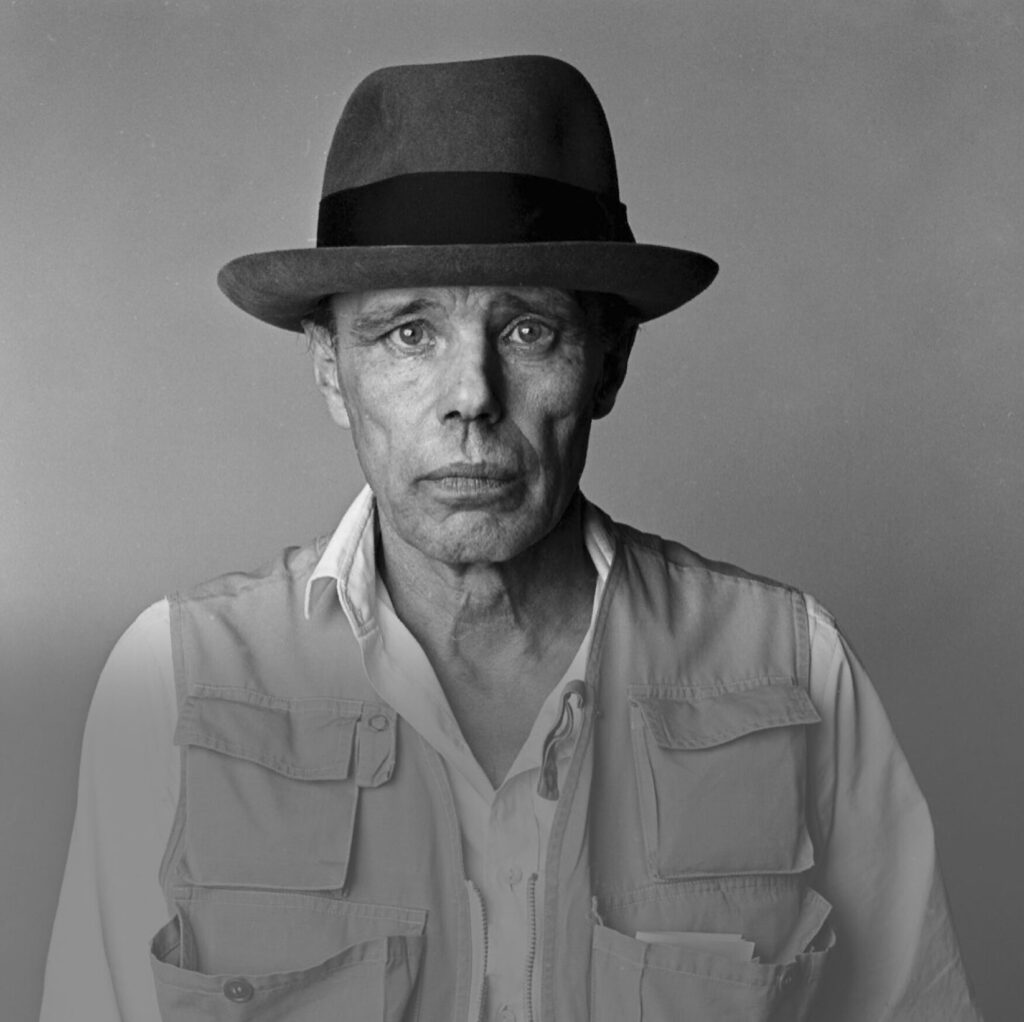
Workspace for Social Sculpture works from the understanding that social sculpture is not simply another name for participatory art or socially engaged projects. It names a wider field of transformation in which no one is outside, because the sculptural material includes how people perceive, how they make meaning, and how shared life is organised through cultural, political, and institutional forms. The claim that “everyone is an artist” becomes, in this frame, less a slogan than a call to responsibility, since ordinary participation continuously shapes the social organism, whether we acknowledge it or not.
This is why connective practice is central to our work. Much of contemporary life delivers information without contact, and contact without consequence, and under those conditions imagination and motivation can collapse into passivity, cynicism, or proceduralism. Studio-based inquiry offers a different pathway, one in which artistic strategies interrupt habitual scripts, widen perception, and help people become internally active again, especially when circumstances are difficult and the path forward is not clear. In this sense the aesthetic and the ethical belong together, because widening perception strengthens response-ability, the capacity to respond rather than react, and to act with greater care in the shared world we are making together.
The Atelier as a Workshop for Inquiry

Latour’s understanding of the atelier is not the romantic image of the artist alone in a studio, and it is not a loose metaphor for creativity. It is a deliberately constructed workshop for inquiry: a setting where a group gathers around a concrete matter that needs to be handled, and where knowledge is treated as something made, tested, and revised through practice.
In that sense, an atelier begins from a situation rather than from a theory. The work is organised around getting a better grip on what is at stake, what is acting on whom, and what consequences different framings carry. Crucially, this does not happen through conversation alone. It happens through mediators: drafts, notes, diagrams, working documents, examples, protocols, and other artefacts that hold attention, make disagreements visible, and allow a group to return to what it has said and done. These mediations are not secondary to the thinking. They are how collective thinking becomes possible, durable, and accountable.
This is why Latour is an inspiration for Not without the Rose. We convene studio-based inquiries that work as ateliers in this Latourian sense. We do not ask people to arrive with finished positions or premature certainty. We build a shared workspace where complexity can be stayed with, described more carefully, and re-described when reality pushes back. Learning becomes durable through propositions that can be tried out, through documentation that can be revisited, through shared vocabulary that can be refined, and through revision that takes responsibility seriously.
Because of this, the atelier becomes a quiet form of governance as well. It makes shared responsibility practicable without collapsing it into hierarchy, charisma, or policy theatre. Responsibility is distributed across people and the traces of their work, so accountability is something a group can keep carrying together over time. That is the craft Not without the Rose is committed to: composing shared worlds that can hold complexity, remain answerable to what is happening, and stay revisable as the situation changes.
Critical Pedagogy & Critical Theatre

Paulo Freire, a Brazilian educator and philosopher, names praxis as the inseparability of reflection and action, insisting that learning becomes political the moment it touches dignity, agency, and responsibility. bell hooks, an American writer and teacher, sharpens the relational dimension by showing how pedagogy is carried through presence, risk, and care rather than through technique alone. Augusto Boal, a Brazilian theatre-maker and founder of Theatre of the Oppressed, extends this into embodied practice by treating theatre as rehearsal for social change, where people step out of passive roles, test possibilities, and experience agency in the making.
Workspace for Social Sculpture works from this same insistence that learning is not neutral and that form matters. Dialogue and problematisation are practised as ways of naming what is happening without rushing toward premature closure, while studio-based inquiry becomes a place to rehearse different forms of relationship, responsibility, and decision-making. In this sense, WSS is not an add-on to education or organisational change, but a practice of collective learning that is ethically grounded and materially enacted, designed to keep the complex as complex while supporting people to act with more honesty, agency, and shared responsibility.
Group Analysis

S. H. Foulkes, the founder of group analysis, helps articulate how people and groups continually co-shape one another through a shared matrix of communication, culture, and unconscious process, so what happens “between” us is not secondary to the work but part of its primary material. Wilfred Bion, writing from psychoanalytic group experience, offers language for why thinking can collapse under pressure without anyone choosing it, and why groups may drift into patterns that manage anxiety at the cost of curiosity, complexity, and responsibility.
Workspace for Social Sculpture draws on this lineage to stay close to the lived emotional life of groups as it is enacted in real time. We pay attention to atmosphere, silence, pacing, defensiveness, splitting, and scapegoating, not to pathologise people, but to notice how a collective field is organising itself and what it is protecting against. Containment, in this sense, is not control. It is the relational capacity that makes thinking possible again, especially when stakes rise and responsibility is unevenly carried, and it is closely linked to our emphasis on dialogue and problematisation, since what cannot yet be said often needs holding before it can become thinkable.
Decoloniality & Epistemic Justice

Decolonial and epistemic justice perspectives keep the work close to questions that are often treated as secondary, even though they shape everything that becomes possible in a group. They sharpen attention to whose knowledge is treated as credible, whose voice is coded as “professional,” who is expected to translate, soften, or educate, and who bears the burdens of institutional change, including the quiet extraction of emotional and relational labour that rarely appears in job descriptions or policy language.
Workspace for Social Sculpture draws on this lineage to notice how coloniality is reproduced through norms and procedures as much as through explicit ideology. What counts as neutral, excellent, rigorous, or safe is never simply technical, because it is shaped by histories of hierarchy and by inherited habits of recognition and exclusion. This means paying attention to subtle forms of erasure and assimilation, to the unequal distribution of risk, and to the ways equity work can be neutralised by bureaucracy or displaced onto those already carrying disproportionate costs.
In practice, this orientation supports a commitment to shared responsibility that is both ethical and concrete. The aim is not moral performance, and not the creation of new scripts that everyone must recite, but the cultivation of conditions in which power can be named without collapse and where accountability can be carried without outsourcing harm or labour to those already marginalised.
Social Pragmatism & Complex Responsive Processes

Social pragmatism supports us in taking our experience seriously. George Herbert Mead, an American philosopher and social psychologist, is a key reference point here because he understood the self as something that emerges in interaction rather than something fully formed inside an individual. Meaning, in this view, is not simply exchanged; it is made in the process of taking one another’s perspective, responding, adjusting, and gradually stabilising shared patterns of action. This helps us stay attentive to how groups generate their own “common sense” in real time, including how roles, identities, authority, and responsibility are negotiated moment by moment through communicative practice.
John Dewey, another foundational pragmatist, reinforces this by treating inquiry as experimental and consequential. Ideas are not doctrines to apply; they function more like working hypotheses that are tested in practice, revised through experience, and judged by the kinds of life they make possible. Workspace for Social Sculpture draws on this orientation by designing for return and rehearsal, not as endless process, but as a disciplined way of learning from consequences and staying answerable to what actually changes in the everyday life of a group.
This lineage also resonates with process-oriented approaches to organisational life, notably the complex responsive processes of relating school founded by Ralph Stacey, Doug Griffin, and Patricia Shaw, who understand organisations not as machines to be controlled, but as evolving , processes and patterns of relating. Change cannot simply be installed from above ,rather it emerges through local interaction, repetition, negotiation, and revision, which is why paradox is treated as a feature of living systems rather than as a problem to eliminate. Over time, this supports a practice of staying with complexity long enough for wiser action to become possible, while remaining grounded in what people can actually do together next.